C# Native AOT: Reaching Maximum Performance
In the modern cloud landscape, where every millisecond and every megabyte counts toward your monthly bill, how we compile and deploy our code has become a strategic decision.
As developers, we are used to the standard .NET execution model: code is compiled into Intermediate Language (IL) and then compiled into machine code at runtime by the Just-In-Time (JIT) compiler. While the JIT is incredibly fast and optimized, modern architectures-especially Serverless and Edge Computing-demand something even more efficient.
What is Native AOT?
Native AOT (Ahead-of-Time) compilation changes the game by compiling C# code directly into native machine code during the build process. This removes the need for a JIT compiler at runtime.
The Strategic Benefits
For a Senior Architect, the advantages of Native AOT translate directly into operational efficiency:
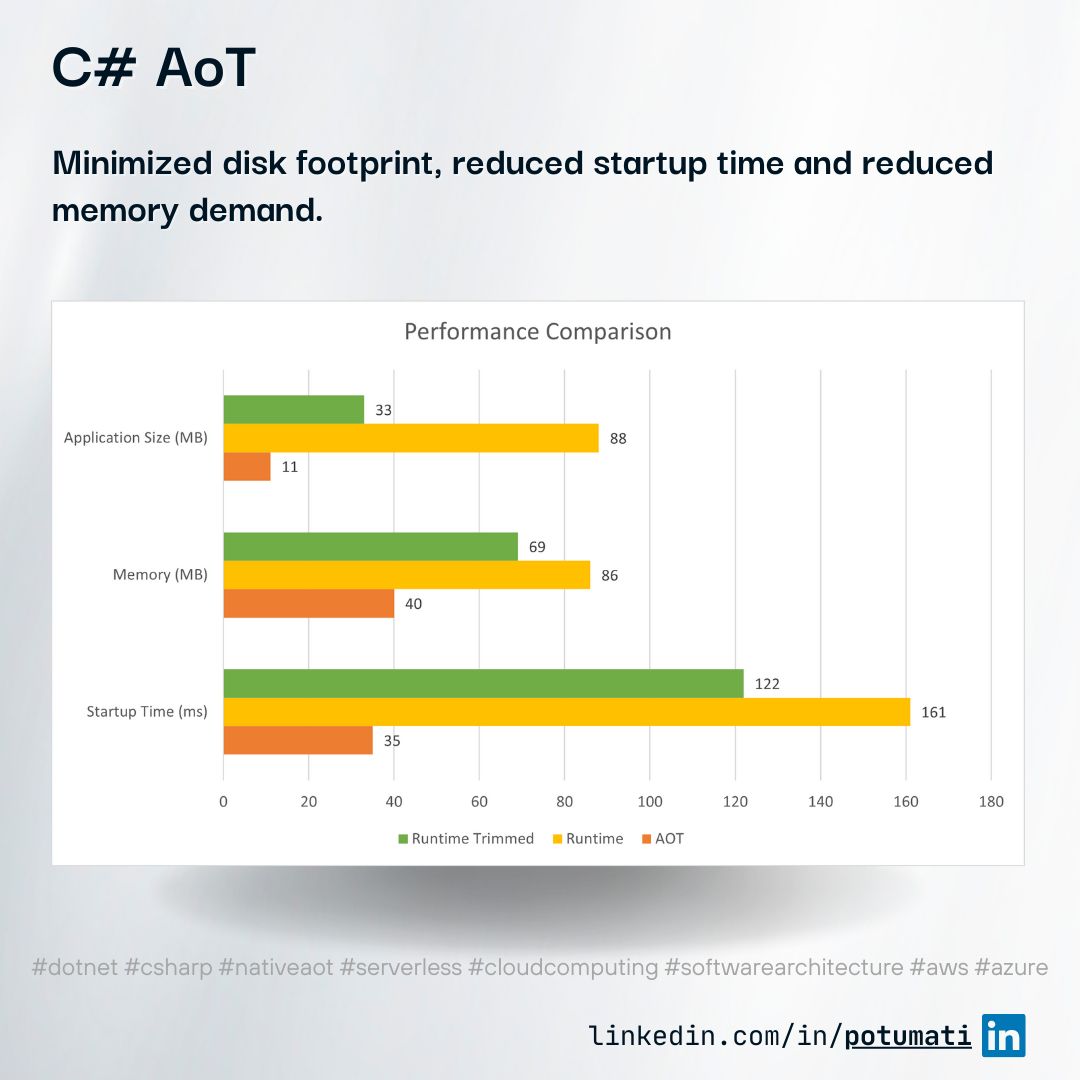
- Faster Startup (Cold Start): Since there is no JIT compilation phase at launch, applications start almost instantaneously. This is critical for Azure Functions or AWS Lambda, where latency on the first request can impact user experience.
- Reduced Memory Footprint: The application doesn’t need to load the JIT compiler or store IL data in memory, leading to significantly lower RAM usage.
- Smaller Binaries: Compared to self-contained JIT deployments, Native AOT produces smaller, leaner executables, which is ideal for containerized environments and Edge Computing.
The “Senior” Reality Check: Trade-offs
Engineering is about managing trade-offs. Native AOT is not a “silver bullet” for every project.
- Reflection and Dynamic Code: Native AOT relies on static analysis. This means features like Reflection do not integrate well, as the compiler cannot always predict which code will be needed at runtime. If your architecture relies heavily on dynamic loading, AOT might not be for you.
- CI/CD Pipeline Impact: Compilation time is significantly longer compared to standard builds. As Tech Leads, we must account for this in our deployment automation strategies.
- Platform Specificity: Unlike IL, which is portable, an AOT-compiled binary is specific to the target OS and architecture (e.g., Linux x64).
Conclusion
Native AOT is a powerful tool for Microservices and Cloud-Native solutions where performance and resource density are paramount. By understanding when to trade the flexibility of the JIT for the raw speed of Native code, we can build more resilient and cost-effective systems.
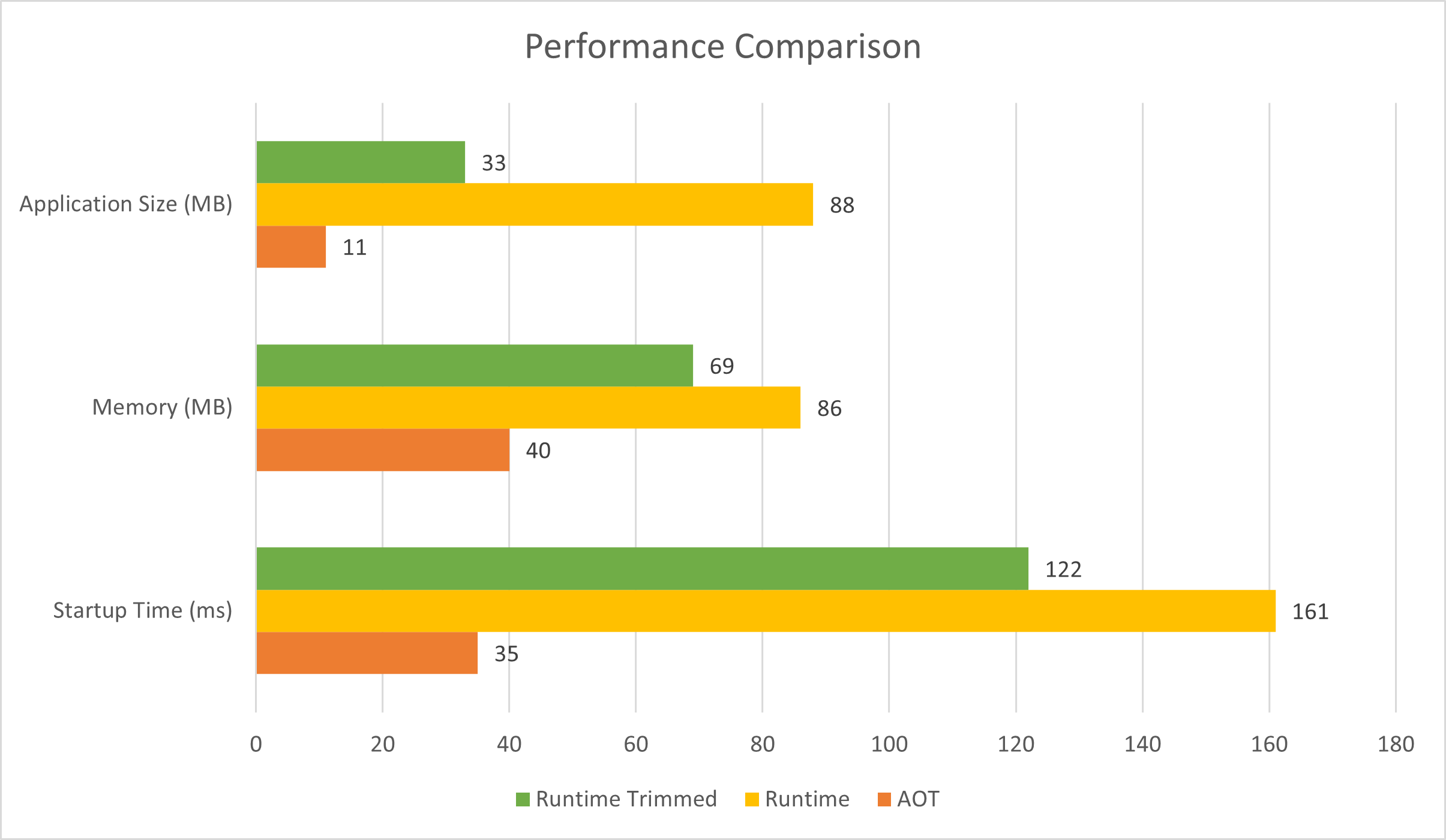
A comparative analysis of memory footprint and startup latency across Standard Runtime, Trimmed Runtime, and Native AOT.
This article was originally inspired by my discussion on LinkedIn .