
When we’re working with multiple services or workers consuming the same queue table, we’ll probably have problems with one worker locking a row and blocking another.
Or, even worse, both processing the same row.
PostgreSQL has the solution!
(Ok, to be fair, SQL Server has it too WITH (UPDLOCK, ROWLOCK, READPAST), but let’s keep our focus on PostgreSQL, which I’m using this week)
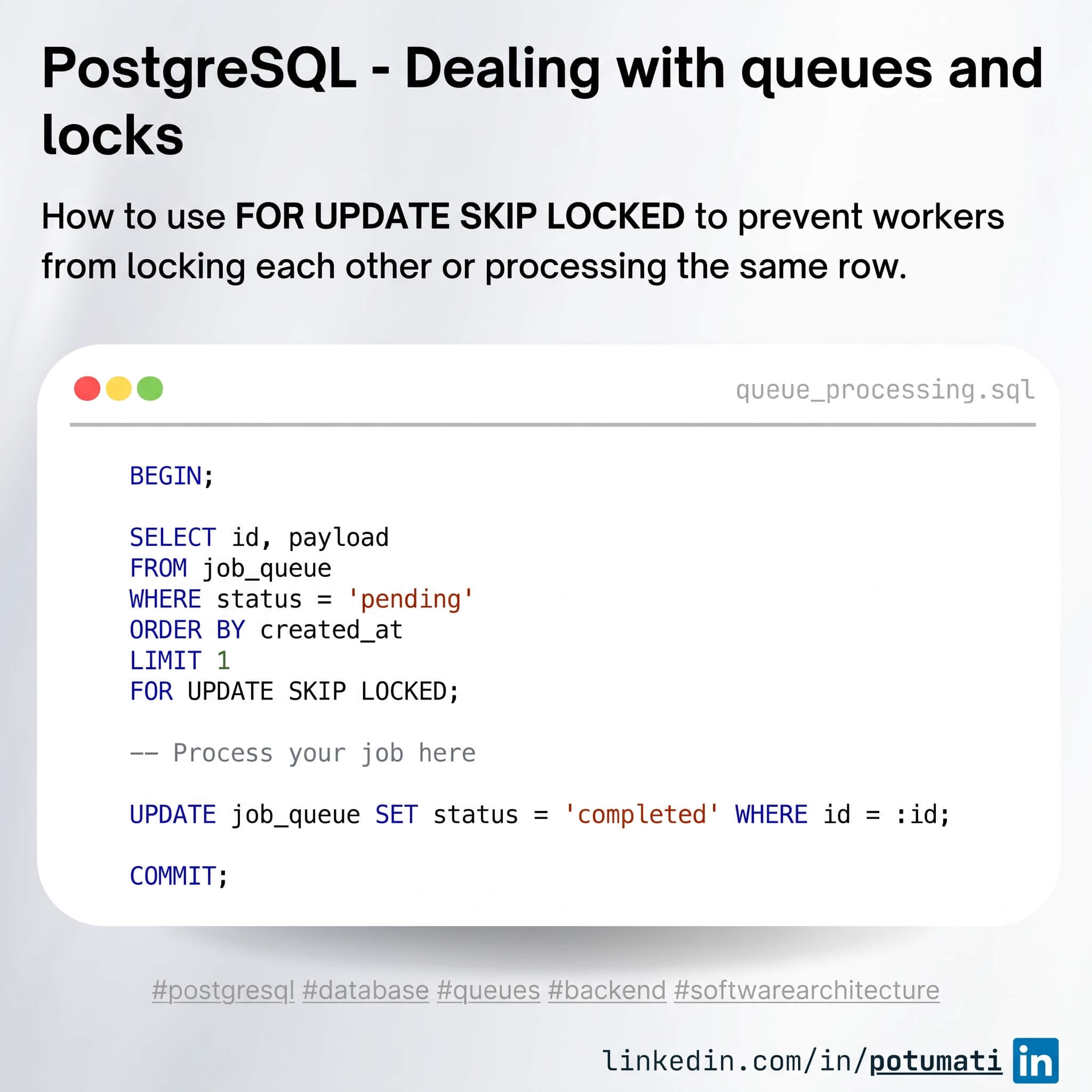
Concurrent workers can skip rows that are already locked and claim the next available job
| |
FOR UPDATE locks the selected row for the current transaction.
SKIP LOCKED tells PostgreSQL: if another worker has already locked this row, don’t wait, just keep going and find the next available one.
This allows multiple workers to consume jobs concurrently without waiting for each other and without claiming the same row.
So, keep it in mind when you’re implementing your outbox pattern solution.
Always make sure it runs inside an explicit transaction (BEGIN/COMMIT), or the lock will be released immediately.