Dependency Inversion (D) in SOLID: Why Is It So Important?
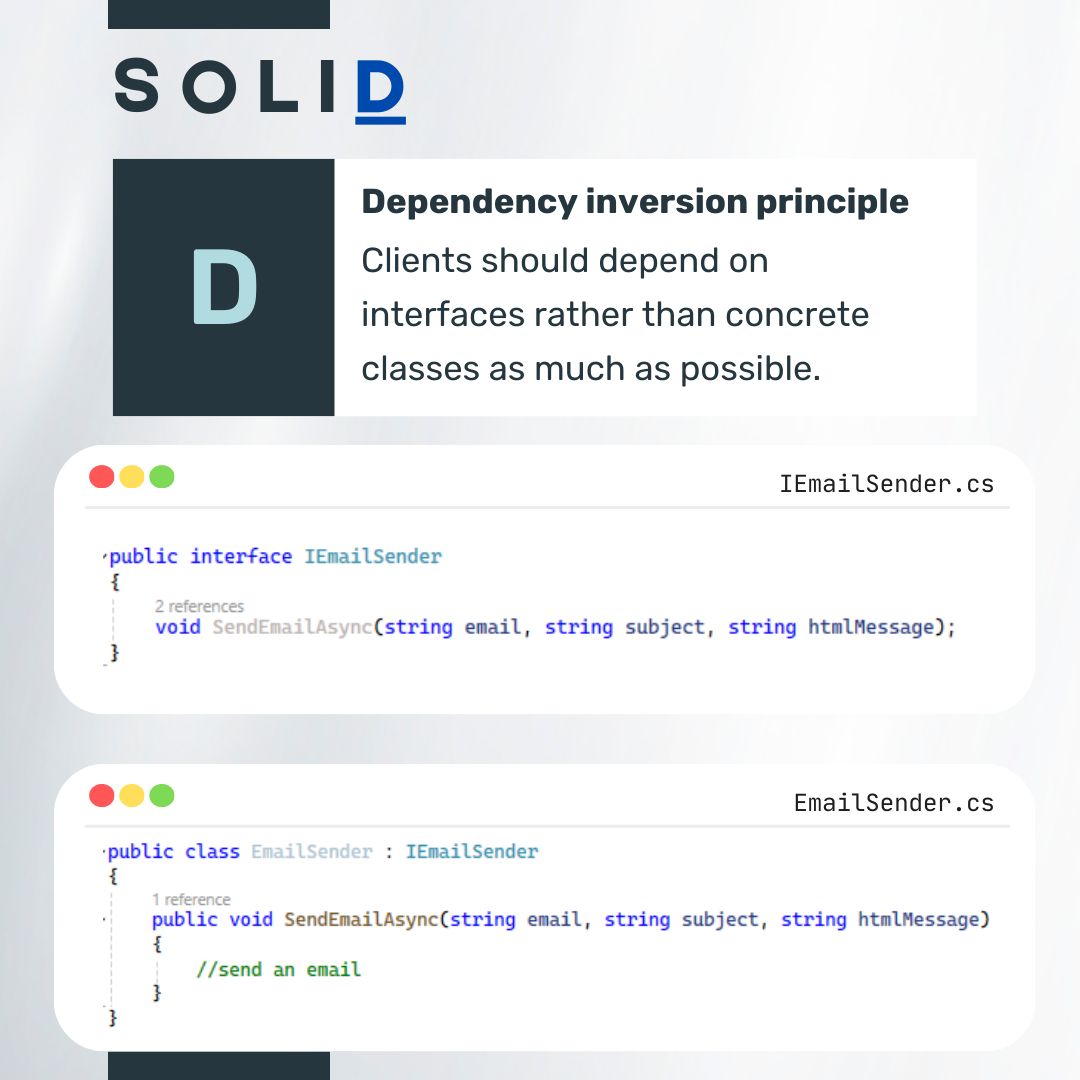
Dependency Inversion (D) in SOLID: Why Is It So Important? The Dependency Inversion Principle (D) reminds us that “high-level modules should not depend on low-level modules; both should depend on abstractions.” This means clients (code consuming functionalities) should rely on interfaces or abstractions, not concrete implementations. This practice reduces coupling, simplifies changes, and makes code more testable. For example, instead of directly coupling a notification service to a concrete class like EmailSender, use an interface such as IEmailSender. This allows you to easily swap implementations (e.g., SMTPClient, API service, message queue, etc) without modifying the client. ...